Why do people spend time creating without getting paid? Three big reasons, in my mind: 1) creating is a form of entertainment, 2) it’s never been easier to create and publish for free, and 3) creating creates real options. We can say yes without having to convince anyone else to say yes. And it’s great. But shifting from free to paid isn’t as easy as we may expect.

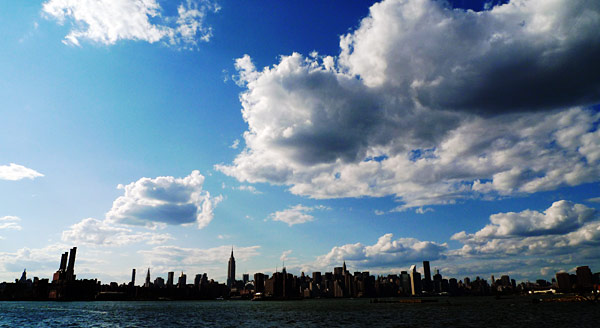
Refining Visions, New York City, New York
Refining, East River State Park, New York City, New York

Wired Magazine, Cognitive Surplus: The Great Spare-Time Revolution:

[Daniel] Pink: We have a biological drive. We eat when we’re hungry, drink when we’re thirsty, have sex to satisfy our carnal urges. We also have a second drive—we respond to rewards and punishments in our environment. But what we’ve forgotten—and what the science shows—is that we also have a third drive. We do things because they’re interesting, because they’re engaging, because they’re the right things to do, because they contribute to the world. The problem is that, especially in our organizations, we stop at that second drive. We think the only reason people do productive things is to snag a carrot or avoid a stick. But that’s just not true. Our third drive—our intrinsic motivation—can be even more powerful.

Creating is fun. We can create and publish without any direct expense (it’s mostly free to blog, to share pictures, to create websites, etc.). It’s small, it’s easy. And we can do it without having to convince anyone to say yes. All we have to do is say yes to ourselves.

Thus, we do things, and share them, without expecting to get paid.

Directly, and short-term, at least.

Indirectly, longer-term, we know that following our passions and creating things we care about helps us get better and develop our skills. Sharing and publishing what we create helps us connect to kindred souls and establish our names and brands. Combined, we create real options: the right, but not the commitment, to undertake a further decision in the future. Real options have value, by creating the potential for us to turn these skills, connections and brands into something more meaningful and rewarding.

Unexercised, these real options are merely opportunities: mere ideas and dreams of what we or our projects could become.

But while it’s so easy to create real options, exercising them is often harder than we think.

Turning something we started for fun, or because we cared, into a money-making endeavor isn’t easy: turning on the built-in business model forces us to flip a switch, to reconsider our motivations, to make different decisions, to create processes, reports and structures that weren’t necessary when we just did things for fun. The small is easy, but we get rewarded (personally and financially) for the big.

Flipping the switch is the hard way to get paid.

Perhaps the key isn’t to flip the switch or change our motivations, but to exercise these options by building these activities into the other things we do, to augment our lives and break down the silos we create between projects and sides of our lives.

Link. Build on top of each other. Don’t throw away, but recycle and reuse. Shift lanes, not directions. Small things, done wisely, can add up to big.

It’s surely more natural, more organic, more human.

That’s how we turn what we did for free into something we do for money.

Right?

Post inspired by Mike Masnick, How Monetary Rewards Can Demotivate Creative Works, and by Julien, because he’s so good at making me feel I need to write more. And thank you, Barrett, via Sloane, for bringing the idea top of mind.

Hello, I'm Taylor Davidson.
I'm an early-stage VC and a photographer. If you liked this post, please subscribe to this blog. For more like this, check out the archives, and follow me on Twitter @tdavidson.
  • http://www.frogblog.biz Fred H Schlegel

    It can be unsettling how quickly 'fun' and 'hobby' becomes 'unpaid work.' An issue of attitude I think – so I like your image of augment and link. If our unpaid pursuits build on the entire package of our lives then maybe the frustration will be kept at bay. All the while broadening our foundation so that one day when our 'paid work' becomes 'unpaid' we've got a few paths to follow that aren't too unfamiliar.

  • http://www.ethanbauley.com Ethan Bauley

    Great stuff. This riff is a close relative of “ideas are nothing w/o execution”.

    Love that post you linked to “on justifiying [marketing] investment”.

  • http://www.taylordavidson.com/writing/ Taylor Davidson

    Yep.

    And I figured you'd like that post on justifying [marketing] investment :)

  • http://www.taylordavidson.com/writing/ Taylor Davidson

    Changing one's frame of mind from “hobby” to “work” is hard. It's too easy to lose the fun, vibrancy and energy that made us so good at our hobbies. Develop, build, augment, add, rather than switch. It's part of making ourselves better people and living better lives, not just doing better at our current job.

  • http://twitter.com/bbryon Bryon Beck

    A great read and it reminds me of Gordon MacKenzie (former Creative Paradox for Hallmark) who said, “I became a liaison between the chaos of creativity and the discipline of business. I had no job description and a title that made no sense, but people started coming to me with their ideas, and I would listen to those ideas and validate them. When you validate a person, what you're really doing is giving them power — like a battery charger.”
    We just need a little validating ourselves sometimes.

  • http://shawnpcarpenter.tumblr.com/ Shawn Carpenter

    Interesting article. Being in a transition period myself this helps me to see it from another perspective. Thanks!

  • http://www.facebook.com/profile.php?id=780502455 Hieronymus Murphy

    I live in a fact-based universe, and this article is so weighted down with feel-good, fuzzy and vague phraseology that I find it laughable.

    For instance, just what the hell does “Flipping the switch is the hard way to get paid” mean exactly?

  • http://www.lostfocus.de/archives/2010/06/14/why-we-create-without-getting-paid-and-why-its-hard-to-get-paid/ Why we create without getting paid (and why it’s hard to get paid) « LostFocus by Dominik Schwind

    [...] Why we create without getting paid (and why it’s hard to get paid) [...]

  • http://www.maigi.com maigi

    It takes time for people to understand that starving artist is not the best artist. I started to pay for online music, when I realized that one genius musician had to make a living with office work and hadn't time for his creation. I wanted to enjoy his music, so I realized, it would be natural if I want to see and hear him playing then it should be also me who helps him have a bread on the table, so he shouldn't worry about that. It's natural to pay to the artist if we want to enjoy his creation. If we wouldn't want to pay then we shouldn't enjoy it as well and live our miserable gray monotone life.

  • http://www.mostlymaths.net/ Ruben Berenguel

    Ego. Creating satisfies ourselves, by showing what we may be able to do.

  • http://www.taylordavidson.com/writing/ Taylor Davidson

    I'm guessing you've read the book Gordon wrote about fostering innovation, Orbiting the Giant Hairball? I read it once but forgot the author, the title, everything about it, except for the core ethos. Until now. Thank you for bringing it back to me!

  • http://www.taylordavidson.com/writing/ Taylor Davidson

    How are you getting yourself through your transition phase? What's the
    biggest thing you've learned?

  • http://www.taylordavidson.com/writing/ Taylor Davidson

    Focsuing on information can blind us from wisdom.

    I live in a fact-based universe also, and these are some of the facts
    of my life. I've chosen to explain them this way at this time, and I'm
    happy with that.

  • sloaneberrent

    It is interesting what we consider “fun' and what we consider “unpaid” and how they might switch back and forth many times. For years I wrote “for free' for a large city-based blog. But I received a lot in return, free tickets to shows, invites to openings, comps at new restaurants and almost always with a +1 so that I could take a friend, invite someone along and share the experience. There was social capital too – everyone knew who I wrote for and it really was fun.

    That was a few years ago. I live in a new city now and a similar opportunity presented itself to me but it felt like work. It actually was paid (minimal) but it didn't feel like fun. I had to step back and say no. It was hard! They were similar opportunities.

    Part of it, for me, is age. I can't justify as much “fun for free” in my life. But it has to be more. I have “other” fun/unpaid things in my life and my plate is full.

    Interesting how life changes perspective.

  • ian

    what a boring and mundane life you must live!

  • http://www.frogblog.biz Fred H Schlegel

    Interesting, maybe the act of being offered pay (a token amount) changed your relationship with the publication in a way that raised the 'unfair' flag. Going from “I'm doing this for the perks” to “I can't believe they're not paying me what I'm worth.”

  • http://www.frogblog.biz Fred H Schlegel

    Interesting, maybe the act of being offered pay (a token amount) changed your relationship with the publication in a way that raised the 'unfair' flag. Going from “I'm doing this for the perks” to “I can't believe they're not paying me what I'm worth.”

  • http://inoveryourhead.net/how-to-get-paid-for-what-you-do-for-free/ How to get paid for what you do for free « in over your head

    [...] (Hat tip for inspiration: Taylor Davidson) [...]

  • http://shawnpcarpenter.tumblr.com/ Shawn Carpenter

    Right now I am in the immigration process so I am not able to work a regular job so I am using the time off as an opportunity to build my brand and to improve my work. The biggest thing I have learned is that in order to get your work noticed you need to participate in other discussion that are relevant to your interests. I have also done some guest posting to other blogs that are making money on the web in order to drive traffic to mine.

    As of this message I am not monetizing any of my blogs, but I am strongly considering it. I did this before and made some money with google ads and websites such as pay per post, but this time I would prefer that the work stands out as opposed to the advertising taking a front seat.

    At this point I am focusing on networking, linking and discussing. It has led me to a few collaborations which are going quite well. It has also opened the door to new business opportunities which I can tie into my work in the future once I get through the immigration process.

    As for putting out a good product it's all about repetition and experimentation. The more you practice the better you become. It's like being good at any sport you need to train the body and the mind. Except in our case it's mostly just training the mind. I try to shoot photos everyday and write something every few days just to keep my mind sharp. I mix it up with a video now and again and have even considered going back to writing music. Also I come up with my own recipes in the kitchen at home. Creativity breeds creativity and mixing it up keeps is from getting dull and boring like a job.

  • http://www.taylordavidson.com/writing/ Taylor Davidson

    Great examples, and thank you for the thoughtful response. I believe that indirect monetization of blogs is a better, more valuable and meaningful strategy than short-term monetization. I wish I had a large data set to prove that.

    Did you read @julien's post with tactical examples? http://inoveryourhead.net/how-to-get-paid-for-w…

  • http://www.taylordavidson.com/writing/ Taylor Davidson

    Great examples, and thank you for the thoughtful response. I believe that indirect monetization of blogs is a better, more valuable and meaningful strategy than short-term monetization. I wish I had a large data set to prove that.

    Did you read @julien's post with tactical examples? http://inoveryourhead.net/how-to-get-paid-for-w…

  • http://www.hellodelight.com/ matthewbward

    I expect the “why we create” part is probably fairly well defined: It gives us social capital, it makes us happy, it opens up future possibilities, etc. I think it's very interesting you've used real options as your lens. An option is an investment on something you hope to pay you some value in the future. But, most options expire worthless and aren't exercised. When you look at personal/professional endeavors through this lens, does it change your perspective? At what point do you write off these options you've created? And to take it a step further, are there more uses for your options such as transferring them or using them to hedge something else?

    Sorry if that went too far down the rabbit hole. :)

  • http://shawnpcarpenter.tumblr.com/ Shawn Carpenter

    Thanks for the link to the article. I have read it and now I am giving it some thought. He makes some very valid points!

  • http://www.taylordavidson.com/writing/ Taylor Davidson

    The “why we create” part isn't hard to understand (at least to us, as members of that tribe).

    No, that's the exact rabbit hole I started to dive into. Looking at the things I've invested my time, energy and passion in creating through the lens of real options (and sunk costs) really makes me think about how to value, hold and exercise these options.

    I wish we had a data set of people with a long enough time series to help people make these decisions, to move from anecdotal / qualitative to quantitative.

  • http://shawnpcarpenter.tumblr.com/ Shawn Carpenter

    Right now I am in the immigration process so I am not able to work a regular job so I am using the time off as an opportunity to build my brand and to improve my work. The biggest thing I have learned is that in order to get your work noticed you need to participate in other discussion that are relevant to your interests. I have also done some guest posting to other blogs that are making money on the web in order to drive traffic to mine.nnAs of this message I am not monetizing any of my blogs, but I am strongly considering it. I did this before and made some money with google ads and websites such as pay per post, but this time I would prefer that the work stands out as opposed to the advertising taking a front seat.nnAt this point I am focusing on networking, linking and discussing. It has led me to a few collaborations which are going quite well. It has also opened the door to new business opportunities which I can tie into my work in the future once I get through the immigration process.nnAs for putting out a good product it’s all about repetition and experimentation. The more you practice the better you become. It’s like being good at any sport you need to train the body and the mind. Except in our case it’s mostly just training the mind. I try to shoot photos everyday and write something every few days just to keep my mind sharp. I mix it up with a video now and again and have even considered going back to writing music. Also I come up with my own recipes in the kitchen at home. Creativity breeds creativity and mixing it up keeps is from getting dull and boring like a job.

  • http://www.taylordavidson.com/writing/ Taylor Davidson

    Great examples, and thank you for the thoughtful response. I believe that indirect monetization of blogs is a better, more valuable and meaningful strategy than short-term monetization. I wish I had a large data set to prove that.nnDid you read @julien’s post with tactical examples? http://inoveryourhead.net/how-to-get-paid-for-what-you-do-for-free/

  • matthewbward

    I expect the “why we create” part is probably fairly well defined: It gives us social capital, it makes us happy, it opens up future possibilities, etc. I think it’s very interesting you’ve used real options as your lens. An option is an investment on something you hope to pay you some value in the future. But, most options expire worthless and aren’t exercised. When you look at personal/professional endeavors through this lens, does it change your perspective? At what point do you write off these options you’ve created? And to take it a step further, are there more uses for your options such as transferring them or using them to hedge something else? nnSorry if that went too far down the rabbit hole. :)

  • http://shawnpcarpenter.tumblr.com/ Shawn Carpenter

    Thanks for the link to the article. I have read it and now I am giving it some thought. He makes some very valid points!

  • http://www.taylordavidson.com/writing/ Taylor Davidson

    The “why we create” part isn’t hard to understand (at least to us, as members of that tribe).nnNo, that’s the exact rabbit hole I started to dive into. Looking at the things I’ve invested my time, energy and passion in creating through the lens of real options (and sunk costs) really makes me think about how to value, hold and exercise these options.nnI wish we had a data set of people with a long enough time series to help people make these decisions, to move from anecdotal / qualitative to quantitative.

  • http://www.dropofchange.com/getting-serious-about-getting-paid/ Getting Serious About Getting Paid

    [...] people get paid for very long to coast; if you’re not creating every day, shifting gears instead of changing direction, you’re only going to coast to a gradual end.  You may not [...]

  • http://www.taylordavidson.com/writing/2010/07/10/purpose-profit/ Funding the Gap between Purpose and Profit | Taylor Davidson (@tdavidson)

    [...] on Why we create for free (and why it’s hard to get paid), leveraging @Julien’s perfect how-to counter-point, and thinking about how we fund the gap [...]

  • http://jazzfolks.com/2010/09/09/why-do-we-play-music-write-poetry-and-paint/ Why do we play music, write poetry, and paint? | Jazz Folks

    [...] I guess I’m not the only one that wonders this: Same question with some inane comments, a blog discussion about the animated lecture by Daniel Pink. [...]

MORE: Financial Models for Entrepreneurs