Once admired for their breadth of knowledge and ability, polymaths are now ironically mocked for the exact same quality. Why?

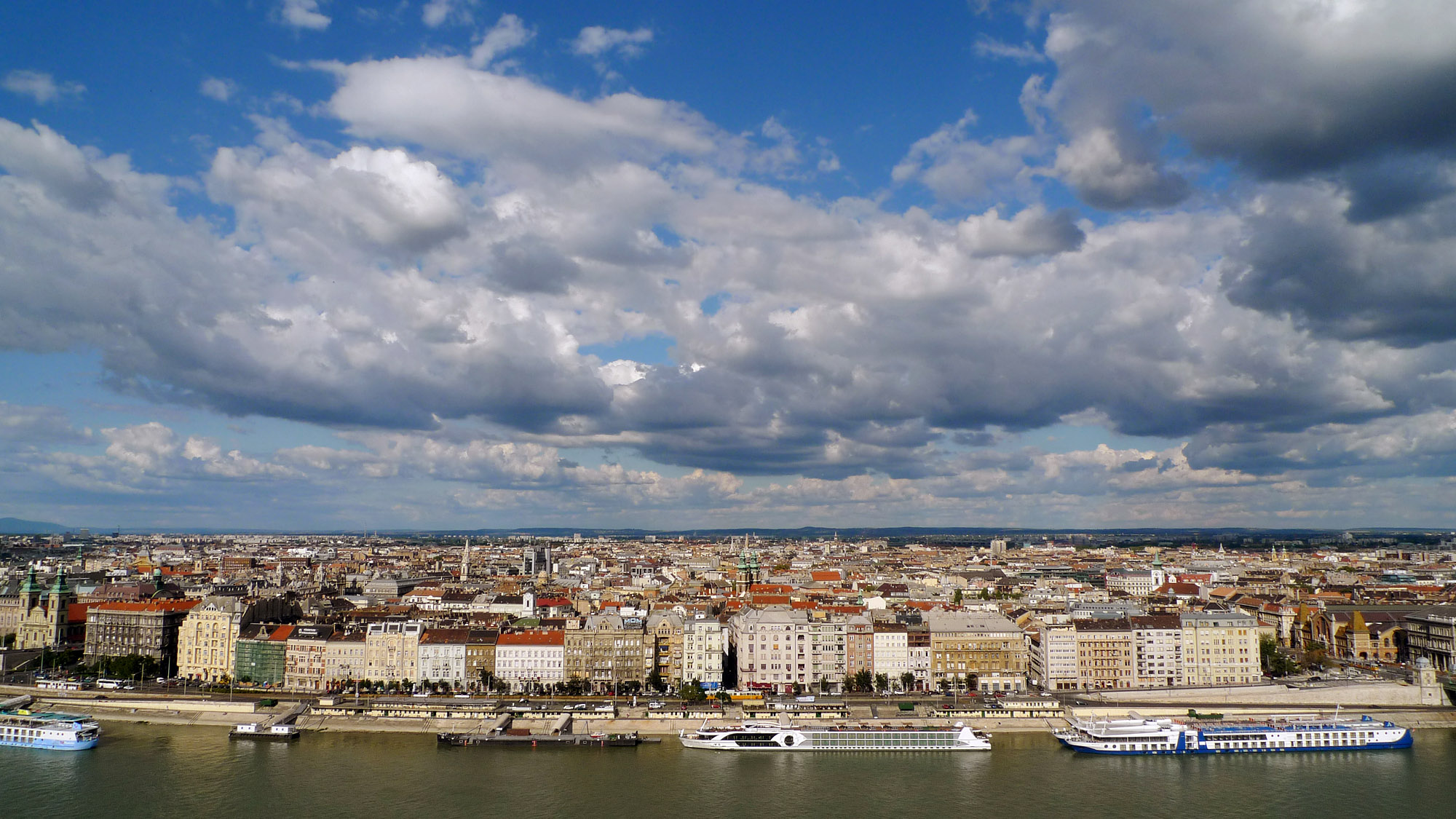
CLICK TO VIEW LARGER: Wide open, Budapest, Hungary

Wide open, Budapest, Hungary (Click on photo to view larger)

Edward Carr in Intelligent Life Magazine, The Last Days of the Polymath:

Isaiah Berlin once divided thinkers into two types. Foxes, he wrote, know many things; whereas hedgehogs know one big thing. The foxes used to roam free across the hills. Today the hedgehogs rule.

Foxes, otherwise known as polymaths, individuals “whose expertise fills a significant number of subject areas”, were once admired and beloved for their breadth of knowledge and ability to contribute across disparate fields. The terms Renaissance Man, Universal Genius and generalist all spring from the same idea, with slight differences in meaning deriving from their relative breadth, depth and level of impact across fields.

But today, the term polymath carries a more ironic meaning as a dabbler or a “jack of all trades, master of none”.

What happened?

As society’s overall level of intellectual knowledge has risen and become more dispersed, dominating multiple fields has become more difficult for the individual, re-affirming the value of specialization and forcing potential polymaths to focus their efforts on single areas. The market economy provides the feedback loop (money and more money) that incents us to specialize.

As Carr points out in his essay, even if it’s easier today to learn about and educate oneself about a wider variety of subjects, it’s harder to do something with that knowledge; dabbling across fields is easier, but achieving in multiple areas is far, far harder.

The danger? Carr’s finest point:

Polymaths were the product of a particular time, when great learning was a mark of distinction and few people had money and leisure. Their moment has passed, like great houses or the horse-drawn carriage. The world may well be a better place for the specialisation that has come along instead. The pity is that progress has to come at a price. Civilisation has put up fences that people can no longer leap across; a certain type of mind is worth less. The choices modern life imposes are duller, more cramped.

The question is whether their loss has affected the course of human thought.

Yesterday’s polymaths have been supplanted by the crowd.
But even as I sentimentally decry the loss of the polymath, I’ll admit that overall it’s a good thing for society.

No longer must we rely on the knowledge from a single polymath to bridge fields and disciplines: it’s now easier, cheaper, faster and simply better strategy to tap into experts from different fields.

We all know crowds aren’t always wise; groupthink and death by committee are all-too-familiar examples of crowds gone wrong. But instead of disproving the power of the crowd, to me it merely indicates how much there is to learn about how to tap into the right people, nurture the right communities and create the right incentives, markets and networks for collaboration and co-creation.

Perhaps we need a polymath to nudge us down the right path :)

Note: Prior thought not cited but relevant: Haque, Hagel, edges and cores, Coase, theory of the firm and transaction costs.

Related: Previously posted on tumblr, contained in a post by Andrew Chen about building a team for seed stage startups, Andrew makes a note about doers and philosophers (monomaths and polymaths, perhaps), with the solid advice: get doers.

Hello, I'm Taylor Davidson.
I'm an early-stage VC and a photographer. If you liked this post, please subscribe to this blog. For more like this, check out the archives, and follow me on Twitter @tdavidson.
  • http://www.hellodelight.com matthewbward

    I think it's interesting to look at polymaths with a lens for the academic study and for organizational design. I'm not sure so how I agree that polymaths are disappearing or becoming less relevant; in fact I'm tempted to argue the opposite.

    In college today, everyone is trying to be a polymath judging from the distribution of degrees awarded. Most are in general studies of some sort; math and science degrees are in the low single digits. If people are going to school to become polymaths and then learning specificity on the job, we'd expect to see people employed in the same field for a long time. But we don't. We see an average of eight careers for folks in generation X+. That sounds like a polymath to me.

    On the organizational design side, I think the switch you're seeing is a normal part of the business cycle brought on by the VC bubbles of the past 20 years. We've seen engineers rise to CEO far more often than we used to. This is a natural result of an emerging information economy when specific knowledge is very valuable. As such, these engineers-turned-CEOs bring a particular pacesetting leadership style with them that dictates knowledge mastery over something like EQ. I do agree this group of people has done a bit to destroy the value of the polymath but I don't think it's going to stick as we enter the next cycle.

    Your last point about replacing the polymath with a crowd of specialists is really interesting. Assuming you can organize this efficiently, it's true there is utility to be gained from doing so. However, my concern is for vision. Do you think it's possible for a crowd to supply vision? If so, and it's repeatable at scale, that could truly be the end of not only polymaths, but leadership as we know it.

  • http://www.frogblog.biz Fred H Schlegel

    I wonder if what is happening is actually a narrowing of the average polymath from broad awareness of most fields of study to some fields of study. Still more agility than one who limits their awareness to a single field of study. Maybe Matthew has it right from the perspective that both hedgehogs and foxes are moving towards the mean. For me the real question falls on whether various segments of 'the crowd' can be moved to listen and learn from other segments or if we will end up continuing along the path of shouting at shut ears.

  • http://www.taylordavidson.com/writing/ Taylor Davidson

    The segments of the crowd will move to listen and learn from other
    segments if it's economically profitable for them to do so.

    I believe the economics that underlie collaboration strategy will
    show, very soon and very clearly, that “shouting past each other” and
    failing to listen and share with other segments (the edges) is simply
    bad strategy.

    And that's why polymaths do not have the same role, power, status or
    relevance as they originally did: it's just not the most efficient or
    effective way to distribute data, knowledge or wisdom.

  • http://www.taylordavidson.com/writing/ Taylor Davidson

    Sorry, people are not going to schools attempting to be polymaths;
    we've shifted the kind of specialization that used to be taught in
    undergraduate education to graduate education, as access to education
    has forced us to create new ways to differentiate ourselves. The
    dynamic is competiton and degree inflation, not a desire to be a
    polymath.

    “Eight careers for Gen X” is a misunderstood notion; even if the stat
    is correct, it's really referring to jobs, not careers, and it's
    surely not indicating the greater attainment of the depth and breadth
    of ability and achievement necessary to be a polymath. It's simply not
    possible that the average person in Gen X is trending towards being a
    polymath.

    This is *not* part of the biz cycle, but part of a much longer
    societal and business shift; the industrial revolution created similar
    incentives towards specialization, and any shifts created by the
    “information economy” have only amplified the shift.

  • http://www.taylordavidson.com/writing/ Taylor Davidson

    Matt and Fred: Now, I will admit that in my comments I continue to use
    a traditional and perhaps outdated definition of a “polymath”. If it's
    no longer possible to be a polymath in that sense (or just much
    rarer), then does that definition still serve a purpose?

    I want to discuss the shift based on economics, not semantics…

  • http://www.hellodelight.com matthewbward

    From an economic standpoint, I'd argue that specialization correlates very negatively to a skill premium in the long run. There are definitely arbitrage opportunities as innovations emerge but they don't seem to last. Adam Smith's Pin Factory pointed that out quite well: As we divide labor more and more finely, the consequence of any single action loses value. That means losing wage. If that's true, a skill premium can't come from specialty, it has to come from generality. The generalists (those more than an inch deep and a mile wide, granted) therefore receive some sort of “unskilled” premium. Clearly there are exceptions as you consider the folks who build the machines/processes/etc that divide the labor, but on average, specificity doesn't pay. (I think it's this fact that has driven our university system most but that's another post). This wage study is why I say the polymaths are alive and well.

    Introducing the crowd only makes the wage depression worse – if looked at from simple supply and demand economics.

    I think the disagreement we had originally was how much knowledge do you have to cover to be a polymath these days. I like Fred's take: “converge on the mean”. Seems right to me. :)

  • http://www.taylordavidson.com/writing/ Taylor Davidson

    I would love to see a wage study that shows that individuals earn more wages from generality than specificity.

    Remember individuals live in the short run, not the long run; across generations, perhaps “specificity doesn't pay”, but for an individual in one generation, specificity does pay, and perhaps more than ever right now. (Is this one reason why family businesses struggle to make transitions across generations?)

    No, arbitrage opportunities do not last; the real question is “how long do they last”? Do they last long enough to support an individual through their working, wage-earning life?

    Thanks for reframing this around the core issue, because this notion of economic shifts and the variation of impacts on individuals, within societies, and over generations, is the most interesting to me :)

  • http://www.taylordavidson.com/writing/ Taylor Davidson

    “how much knowledge do you have to cover to be a polymath these days.”

    I wonder, if it's less possible to be a polymath under the old definition, do we change the definition to deal with the reality of today, or do we find a new term?

  • http://www.hellodelight.com matthewbward

    Here is one study. Kinda old (2001), probably not the best since it focuses on automation but it's a start: http://ideas.repec.org/p/fip/fedmsr/290.html

    If I see more I'll forward 'em.

  • http://www.hellodelight.com matthewbward

    One more thing…business cycles don't match generations anymore. If you only consider technology (and factor out globalization, restructuring, incentives hysteria, etc) you'll see how it's rewritten industries and occupations.

    Remember when the best/safest/highest earning jobs were to be a computer programmer/CPA/consultant and telecom/media/banking/consulting was enjoying healthy margins? No more; we're on to a new cycle. As cycles get shorter so does the total value of a premium for specificity. Value comes from organization – a classic generalist skill. I think you could model it as NPV pretty easily – specificity requires a much steeper discount than generalization assuming the duration is really different. You're right that opportunities arise during organizational shifts that command premiums (when the skill is scarce). But as these opportunities shorten and require more investment to master, I'm not sure they pay off.

    Creative destruction: It's a bitch, ya'll.

  • http://www.hellodelight.com matthewbward

    Inherit in that, it seems like you're assuming we have a different mental capacity than we used to. I'm not sure that's the case. We know lots but I don't remember the last time I tried to figure out if a poisonous berry would kill me or if I properly gauged the intent of a warlording villager. But if you want to know how to express emotions with colons, periods, and slashes, I'm your generation.

    But it's a super interesting concept. What has evolution done to our capacity to hold and recall information? Could we be the same old school polymath if we wanted to?

  • http://www.taylordavidson.com/writing/ Taylor Davidson

    Cool, I'll read the wage report tonight.

    Ok, this notion of compressing cycles, cycles smaller than
    generations, and the impact on how we have to train (continually
    re-train) is pretty interesting; the real question is how “generic” do
    we truly have to be to make it through a shift?

    what we move away from cycles and towards constant disruption?
    related: http://blogs.harvardbusiness.org/bigshift/2009/…

    my primary thought is that even if cycles of creative destruction and
    reconstruction have shortened, and even if we're in a state where we
    constantly need to re-train ourselves to stay economically viable, I
    don't think the changes in “careers” we go through are big enough to
    justify a rising population of polymaths (at least using the
    traditional definition).

    perhaps I should just loose my close-minded definition of a polymath :)

  • http://www.taylordavidson.com/writing/ Taylor Davidson

    really? not sure how that comes out, but I'm not assuming that. same
    capacity, redirected towards activities that society rewards.

    part of the problem is that “polymath” isn't an absolute definition
    but a relative one; it's not a statement of abilities as individuals
    but in how we rank / compete across the rest of society.

  • http://www.taylordavidson.com/writing/ Taylor Davidson

    Ok, I read the paper: honestly I don't think it applies to what we're
    talking about.

    This paper is concerned about the relative allocation of knowledge
    between capital and labor in a single system in an economy, not the
    relative allocation across all labor inputs in an economy.

    Skill premium does not equal generalism, and “input flexibility” does
    not equate to the generality we're discussing in relation to
    polymaths.

    That's my interpretation.

    Still would love to see a paper that shows that economic returns flow
    to generalism, for the simple selfish reason that I am a generalist
    and I would love to have some hope that being a generalist will “pay”.

  • http://www.taylordavidson.com/writing/ Taylor Davidson

    Ok, I read the paper: honestly I don’t think it applies to what we’rerntalking about.rnrnThis paper is concerned about the relative allocation of knowledgernbetween capital and labor in a single system in an economy, not thernrelative allocation across all labor inputs in an economy.rnrnSkill premium does not equal generalism, and “input flexibility” doesrnnot equate to the generality we’re discussing in relation tornpolymaths.rnrnThat’s my interpretation.rnrnStill would love to see a paper that shows that economic returns flowrnto generalism, for the simple selfish reason that I am a generalistrnand I would love to have some hope that being a generalist will “pay”.

  • http://www.taylordavidson.com/writing/2009/10/16/still-simmering-conversations/ Still-Simmering Conversations | Taylor Davidson

    [...] The Passing of the Polymath, one of Matthew Ward’s comments: … business cycles don’t match generations [...]

  • Anonymous
MORE: Financial Models for Entrepreneurs